Research | Sovereign ai
Sovereign AI for Cursive Handwriting Archives in Kinyarwanda, English and French
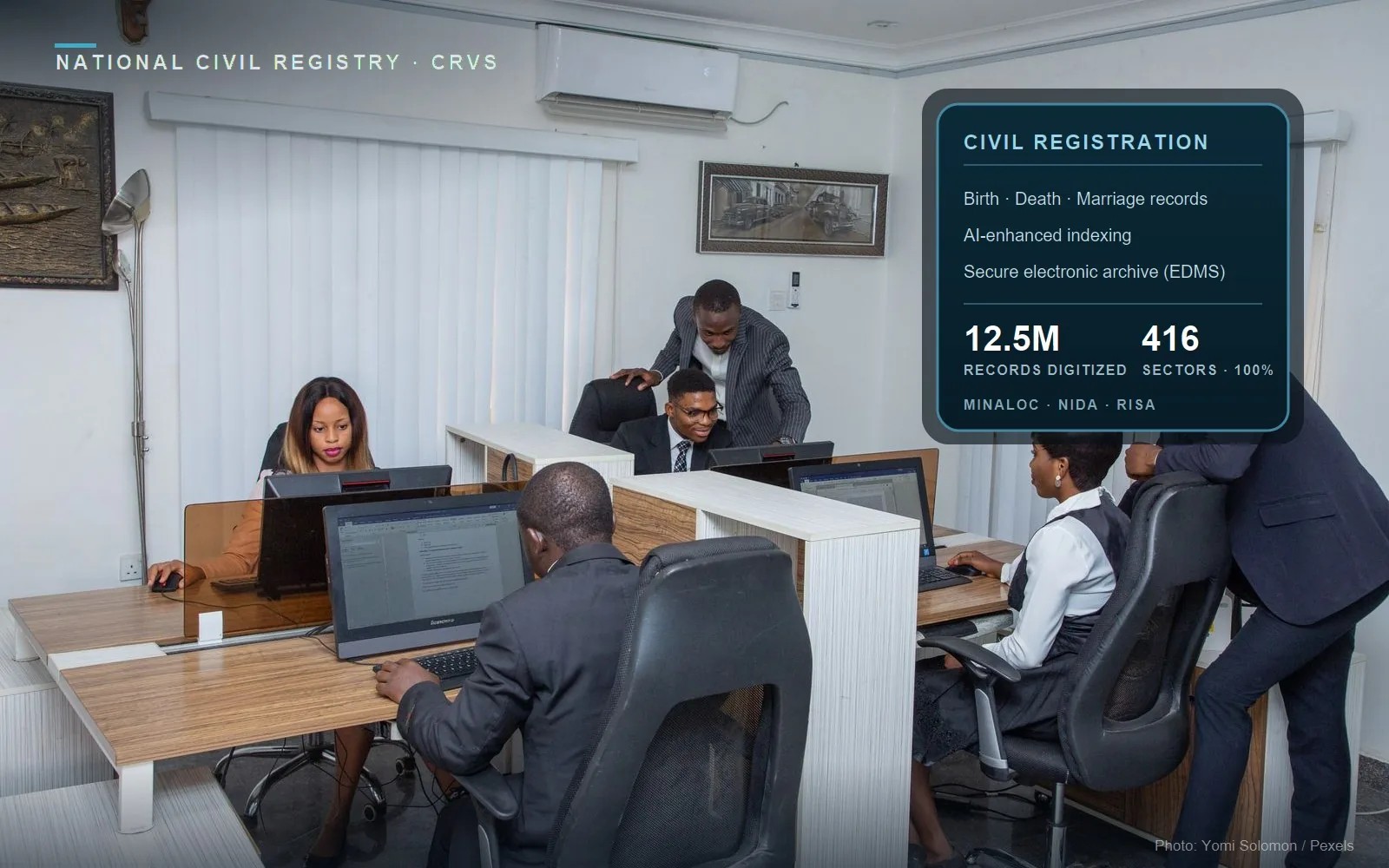
Recognition models trained to read handwritten records in all three languages, so decades of cursive paper archives become searchable text rather than page images.
- Type
- Applied research
- Languages
- Kinyarwanda, English, French
- Applied to
- Handwritten civil records
What happened
Azul Tech is training recognition models to read handwritten archival records in Kinyarwanda, English, and French, turning decades of cursive paper into text a computer can actually search.
 Go furtherCivil registration projectLearn more
What it does
Scanning an archive produces pictures of pages. A picture of a birth record is safe from fire, which matters, but it is not searchable, not verifiable against another record, and not usable by any system downstream.
These models close that gap by reading the handwriting itself, so a scanned page becomes a record with a name, a date, and a place in it that a registry can index and a clerk can find.
Why three languages, and why cursive
Rwanda's archives were written across different administrative eras, which means one shelf can hold Kinyarwanda, French, and English, sometimes on the same page. A model fluent in one of them fails on the others.
Cursive is the harder problem. Printed text recognition is close to solved and has been for years. Joined handwriting, written at speed by hundreds of different clerks over decades, with regional spelling and inconsistent forms, is not. Kinyarwanda in particular has little of the training data that makes this straightforward in widely resourced languages, which is precisely why the capability has to be built rather than bought.
The problem it solves in the community
A citizen who needs proof of a birth registered forty years ago is currently asking someone to find one page in a physical archive. That search can take days, it can fail, and the record can be lost or damaged before anyone reaches it.
Without legal identity a person cannot inherit land, enrol in some schools, open certain accounts, or claim entitlements they are owed. The archive is not a filing problem. It is the difference between a citizen who can prove who they are and one who cannot.
Why it has to be sovereign
These are the state's most sensitive records. Sending them to an outside service to be read means handing a foreign provider a complete copy of a nation's civil history, and depending on that provider's terms to get answers back.
Building the capability in-country keeps the archive, the model, and the ability to improve it in the hands of the state that owns the records.